The healing power of communal space is essential in the aftermath of disasters, helping communities recover not just physically but emotionally and socially. While emergency shelters and infrastructure rebuilding are critical, true recovery is incomplete without spaces that allow people to grieve, reconnect, and rebuild a shared sense of identity. Well-designed community centers for healing play a transformative role in fostering resilience and restoring a sense of belonging after natural or manmade catastrophes.
By examining similar post-disaster projects around the world, we see how architecture can support healing. From Japan’s ‘Home-for-All’ projects to Christchurch’s Cardboard Cathedral, these spaces go beyond utility; they provide solace, continuity, and a foundation for rebuilding lives and cities.
1. Fun in Recovery: “Home-for-All” for Children in Higashimatsushima, Japan

Following the 2011 tsunami, Higashimatsushima’s children were among the most vulnerable survivors. In response, one of the Home-for-All projects was created specifically for them, offering a place of warmth and fun amongst the temporary housing units.

Design Features:
- Designed with distinct and dynamic forms, the childrens’ pavilion uses distinctive, locally rooted materials to form captivating spaces to play.
- Designed in the scale of children.
- Encourages social interaction and creative play through irregular, angular spaces that spark children’s imagination and help them move beyond trauma.

Healing Impact:
- Created a space for playfulness in the severely damaged town—a mental shelter for the children who had lost homes and family members.
- Provided an environment where they could regain confidence and emotional stability.
Key Considerations:
Disaster recovery must include spaces that provide children with stability, opportunities for play, and environments designed to support emotional expression and social interaction.
2. Communal Healing: Home-for-All in Soma, Japan

Klein Dytham Architecture’s Home-for-All in Soma City was completed in February 2015. Established as part of the Home-for-All initiative following the 311 Tohoku earthquake and tsunami, the project was designed to serve as a social refuge within the temporary housing communities that replaced over 250,000 destroyed homes.

Design Features:
- Conceived as a large straw hat held aloft by trees, the design creates an inviting yet protective atmosphere.
- Serves as an indoor play space for children aged 0-4, providing relief from concerns about environmental radiation levels.
- Uses cross-laminated timber columns designed to resemble trees, reinforcing a connection to nature.
- A circular plan with layers of spaces.

Healing Impact:
- Gave children a safe indoor environment with fun and biophilic features.
- Fostered community interaction, helping families find comfort and companionship.

Key Considerations:
Indoor spaces could provide a sense of safety while creating a sense of openness and connection to nature.
3. Resilience Through Connection: Home-for-All in Heita, Kamaishi, Japan

Riken Yamamoto and Field Shop designed Home-for-All in Heita as an inclusive community space. It is a place to sit together and talk around a fireside, with the warm light of the lantern roof illuminated for everyone who lives nearby.
Design Features:
- Designed with an umbrella–formed roof with a central fire pit, providing a communal fireside atmosphere.
- Uses a light-permeable translucent roof, allowing soft natural light in during the day and glowing warmly at night.
- Functions as a bar in the evening, offering a comforting, easily accessible social space.

Healing Impact:
- Created a safe and inviting meeting place, where residents could gather and form a sense of community.
- Strengthened community ties through shared meals and spontaneous conversations, including grilling venison and dried squid together.

Key Considerations:
Shared spaces that foster warmth, conversation, and communal rituals are vital in post-disaster recovery.
4. Community Rebuilding: “Heart of Yongan” Community Center, Dali, China

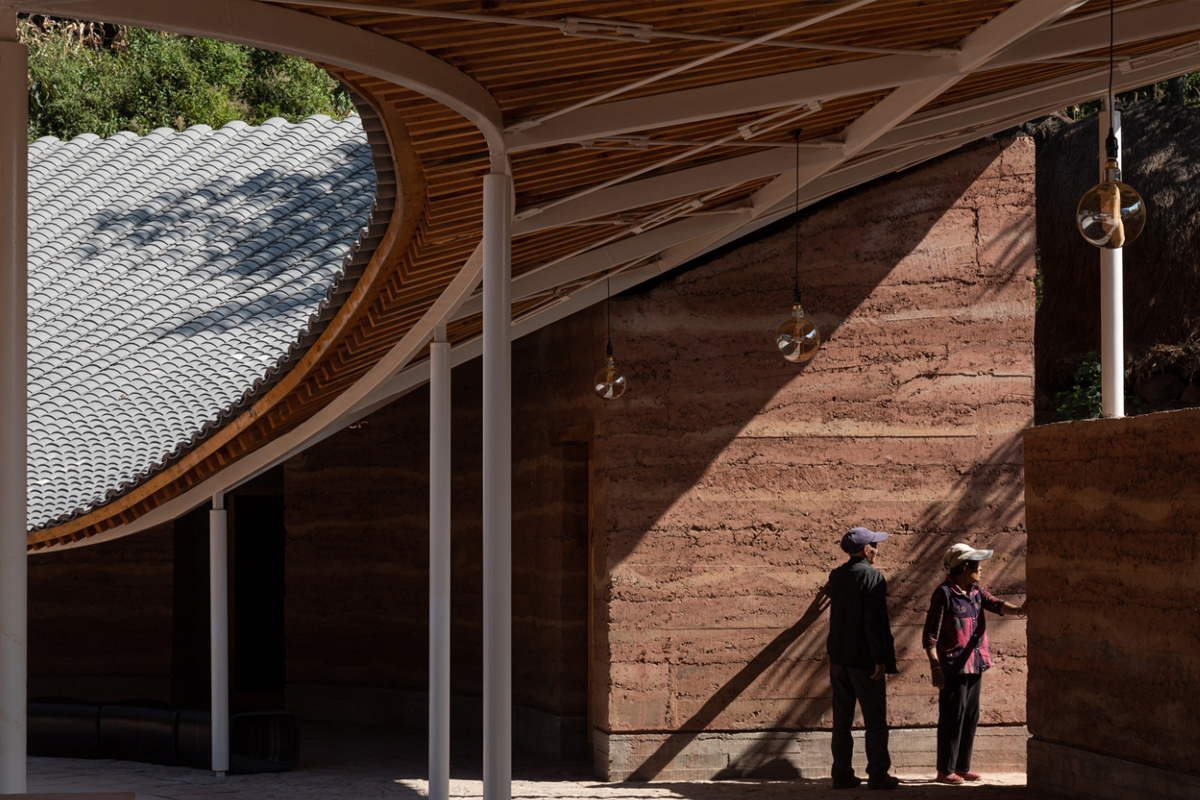
Located in Yunlong County, Yunnan Province, the “Heart of Yongan” Community Center was built to provide a gathering space for the upper villages of Yongan, where residents struggled with poverty and inaccessibility. Designed by a volunteer team from Tongji University, the center serves as a social anchor, reconnecting the community.

Design Features:
- Designed with open public spaces that accommodate daily gatherings, weddings, and funerals, reflecting the villagers’ deep cultural emphasis on communal life.
- Constructed using local materials and traditional rammed-earth techniques, allowing community participation in the process.

Healing Impact:
- Strengthens social bonds by integrating villagers into the construction process, fostering a sense of ownership and belonging.
- Provides a communal hub that reinforces cultural heritage and ensures continuity in local traditions.

Key Considerations:
Rural community centers could integrate local craftsmanship and cultural identity to create meaningful, lasting spaces for social resilience.
5. Cultural Continuity: Luodong Cultural Working House, Taiwan

Originally an industrial site, Luodong Cultural Working House was transformed into a community hub that reflects the local lumber industry, which was once significant. While creating fluid communal spaces, it also plays a critical role in preserving cultural heritage while fostering continuity of the social memory.
Design Features:
- Provides public gathering spaces that become platforms for artistic and social expression, where the emphasis on the space allows the activities themselves to take center stage—embodying the spirit of Genius Loci.
- Reflects local identity through the use of elements that symbolize the previous forestry industry and construction techniques, such as weathered steel, expansive structural spans, large bronze columns, and generous ceiling heights.

Healing Impact:
- The covered space serves as a central node for interaction, encouraging creative and social activities, while its openness amplifies visibility and opportunities for cultural expression.
- The tectonics reinforces the community’s historical engagement with regional history, fostering a shared collective memory that enhances social cohesion.

Key Considerations:
Large shaded open space designed with the right scale can foster different activities, and maintaining cultural spaces with local identity helps preserve memory and foster sociological wellness.
6. Spiritual Anchors: Christchurch Transitional Cathedral, New Zealand

When the 2011 earthquake destroyed Christchurch’s historic Anglican cathedral, the city lost more than a building—it lost a cultural and emotional landmark. Recognizing the need for a place of solace, architect Shigeru Ban designed the Transitional “Cardboard” Cathedral.

Design Features:
- Made from lightweight, sustainable materials (cardboard, wood, polycarbonate), reflecting on environmentalism, impermanence and renewal.
- Served as an inclusive space beyond religious functions, welcoming people of all backgrounds.
Healing Impact:
- Provided an immediate emotional and spiritual refuge while the city planned for long-term rebuilding.
- Showed that even temporary construction can have deep, lasting impact on community healing.

Key Considerations:
This gathering space demonstrates that a temporary building can be a healing space when the emotional and spiritual needs can be fulfilled when integrated with thoughtful design. The means of construction and materials become a strong statement.
Other Works by Shigeru Ban:
See the post 5 Best Designs of Post Disaster Temporary Housing.
Reflections: How Public Spaces Facilitate Healing
The case studies above show that post-disaster recovery is not just about rebuilding structures—it’s about restoring the emotional and social fabric of a community.
Memory & Identity
Spaces like the Luodong Cultural Working House and the Heart of Yongan Center show how architecture can preserve local identity. Through familiar materials and cultural symbolism, these places reinforce collective memory and build cohesion.
Emotional & Spiritual Anchors
The Christchurch Transitional Cathedral demonstrates that temporary structures can provide profound solace. When designed with empathy, even impermanent spaces can become beacons of hope and renewal.
Social Empowerment
In Higashimatsushima and Soma, “Home-for-All” projects gave children and families spaces to play, gather, and re-establish routine. These environments helped restore confidence and offered tools for emotional expression, especially for the most vulnerable.When public spaces are designed with healing in mind, they become more than gathering spots—they become the heart of recovery, ensuring that communities not only survive but emerge stronger than before.

